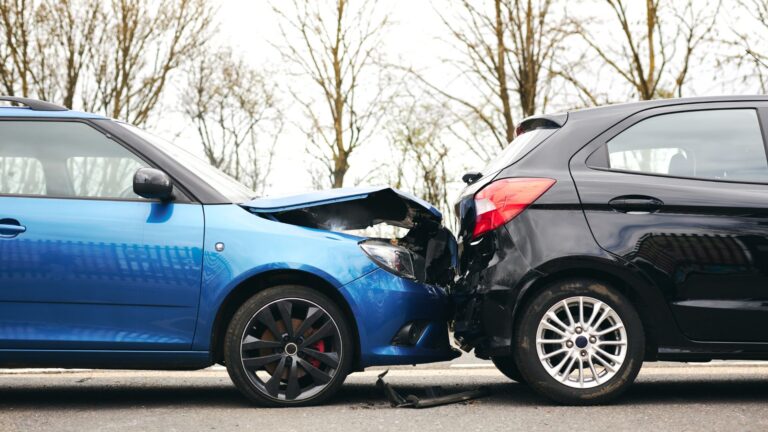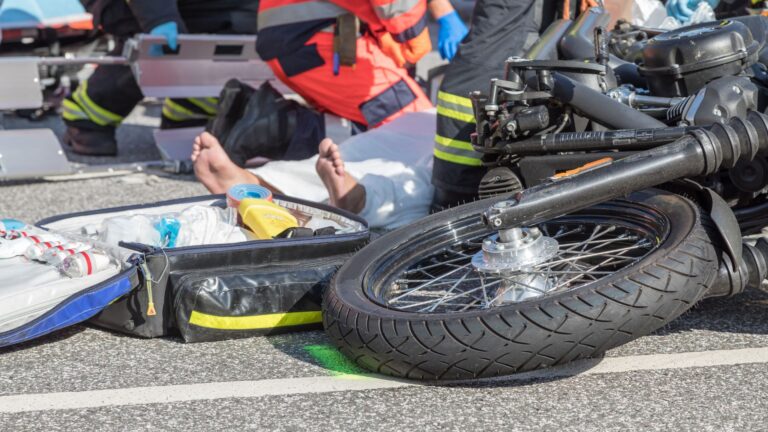
Imagine the scene: You are driving along Topanga Canyon Boulevard in Canoga Park or navigating the busy intersections of Santa Ana when a collision occurs. The adrenaline is high, but the damage seems manageable. You call the local authorities, but because there are no immediate, life-threatening injuries or because the accident occurred on private property—like a shopping center parking lot—the dispatcher informs you that an officer will not be dispatched. “Just exchange information and file a report online later,” they tell you.
For an Ontario resident thousands of miles from home, this can be a moment of significant anxiety. Back home, we are accustomed to the Collision Reporting Centre (CRC) system, and the idea of pursuing an insurance claim without an official police document feels like a legal impossibility.
The question then arises: Is it possible to file a personal injury claim in California without a police report?
The short answer is yes. While a police report is a valuable tool, it is not the “be-all and end-all” of a legal case. In fact, through the strategic alliance of Cross Border Justice and The Simon Law Group, we frequently help clients navigate these “unreported” accidents to secure the compensation they deserve.
1. The Myth of the Mandatory Report
There is a persistent misconception that without a police report, there is no “proof” that an accident happened. In the eyes of the law—both in California and Ontario—this is simply not true. A police report is an investigative tool; it is a summary of an officer’s observations and the statements made by the parties involved. However, it is not a judicial verdict.
In a California civil lawsuit, the standard of proof is the preponderance of the evidence. This means we only need to show that it is “more likely than not” that the other party was negligent. While a police report can help meet this standard, it is far from the only way to do so. In many cases, a police report is actually considered “hearsay” and may not even be admissible as evidence in a California courtroom.
2. Why Police Reports are Often Missing in California
It is increasingly common for California law enforcement agencies—including the Los Angeles Police Department (LAPD) and the California Highway Patrol (CHP)—to decline to attend the scene of a minor or moderate collision. This usually happens for several reasons:
- Resource Allocation: In high-traffic areas like Torrance or Manhattan Beach, police departments often prioritize emergency calls involving active danger or severe blockage of major freeways like the 405.
- Private Property Jurisdictions: If an accident occurs in a parking structure at Westfield Topanga or a private resort in Hermosa Beach, police may decline to file a formal report because the incident did not occur on a public roadway.
- Minor Property Damage: If the vehicles are drivable and no one is being transported by ambulance, officers frequently instruct drivers to simply exchange insurance information.
For a traveler from Ontario, this lack of formal documentation can feel like a “he-said, she-said” trap. This is where a dedicated legal team becomes essential.
3. Gathering Your Own “Evidence Trail”
If the police do not arrive, you essentially become the investigator. To build a successful claim for our Ontario clients, we rely on the digital and physical evidence you can collect at the scene. This “self-generated” report is often more detailed and accurate than a hurried officer’s notes.
The Power of Visual Evidence
In 2026, every smartphone is a powerful forensic tool. If you find yourself without a police presence:
- Photos of the Scene: Take wide shots of the entire intersection or parking lot. Capture the weather conditions, any obscured stop signs, or faded lane markings.
- Vehicle Positioning: Before moving the cars (if safe to do so), photograph exactly where they came to rest. This helps our reconstruction experts at The Simon Law Group determine the angles of impact.
- Insurance and Identification: Take clear photos of the other driver’s license and insurance card. Do not rely on hand-written notes, which can be illegible or contain errors.
Witness Statements
Third-party witnesses are the “gold standard” in cases without a police report. An officer’s report usually only captures the contact info of those who stayed behind. If you are at the scene:
- Ask bystanders for their names and phone numbers.
- Ask if they saw the color of the light or the speed of the other vehicle.
- A brief video of a witness describing what they saw can be an invaluable “placeholder” until our investigators can conduct a formal interview.
4. The Ontario Insurance Angle: Meeting the “Notice” Requirement
While the litigation occurs in California, you are still bound by your obligations under the Ontario Insurance Act. This is a nuance that a U.S.-only law firm would likely overlook.
In Ontario, your insurance policy requires you to provide “notice” of an accident within a specific timeframe (usually seven days, though “as soon as practicable” is the general standard). Many Ontarians worry that if they tell their insurer there was no police report, their Statutory Accident Benefits (SABS) will be denied.
At Cross Border Justice, we guide you through this process. We help you file the Application for Accident Benefits (OCF-1) and ensure that the “Notice of Claim” is handled correctly. We explain to your Ontario adjuster that California law enforcement declined to attend the scene—a common occurrence—and provide the alternative evidence we have gathered to satisfy the provincial requirements.
The SEF 44 Factor
If you are hit by an underinsured driver in Santa Ana, you will need to access your SEF 44 Family Protection Endorsement. To trigger this coverage, you must prove that the other driver was at fault. Without a police report, your Ontario insurer may try to argue that you were responsible. Our dual-firm approach ensures that the evidence gathered in California is formatted specifically to meet the high evidentiary standards required by Ontario insurers.
5. How The Simon Law Group Builds Your Case “Ground-Up”
When we refer your California litigation to The Simon Law Group, they don’t simply wait for a paper trail to appear. They create one. From their headquarters in Torrance and offices across the South Bay, their team utilizes specialized resources to fill the void left by a missing police report.
Surveillance Video Retrieval
In neighborhoods like Hermosa Beach or Canoga Park, almost every corner is covered by some form of video. Our partners move quickly to secure:
- Ring Doorbell Footage: From nearby residential homes.
- Business Security Cameras: From storefronts or gas stations.
- Traffic Camera Data: Coordinating with municipalities to preserve “automated enforcement” footage before it is overwritten.
The “Trial Lab” Reconstruction
The Simon Law Group utilizes their Trial Lab to perform digital accident reconstructions. By using the photos you took of the vehicle damage and the debris on the road, they can create a scientifically accurate simulation of the crash. This effectively replaces the officer’s “opinion” of fault with a forensic certainty that a California jury can understand.
6. Medical Records as the “Silent Witness”
One of the most effective ways to prove an accident occurred without a police report is through contemporaneous medical records.
If you go to Torrance Memorial Medical Center or UCLA West Valley Medical Center immediately following the incident, the clinical notes taken by the nursing staff and doctors serve as a legal record. When you tell the doctor, “I was hit from behind by a car going roughly 40 mph,” that statement is recorded in your chart.
These records provide:
- Verification of the Event: Proof that a trauma occurred on that specific date and time.
- Causation: Linking your physical injuries (such as a concussion or whiplash) directly to the collision.
- Documentation of Complaints: Preventing the insurance company from arguing that your injuries “developed later” or were pre-existing.
7. The Advantage of “Pure Comparative Negligence”
California operates under a Pure Comparative Negligence standard. This is actually a benefit in cases without a police report. In some jurisdictions, if there is a “tie” in the evidence, the plaintiff loses. In California, we can work to show the “percentage of fault.”
Even if the other driver lies and tells their insurance company that you ran the red light, our team works to find the inconsistencies in their story. By comparing the damage patterns to the laws of physics, we can often prove that their version of events is impossible. Without a police report “locking in” a potentially incorrect officer’s opinion, we sometimes have more freedom to present the factual truth of the crash.
8. Strategic Coordination: The Cross-Border Justice Difference
The reason our alliance works so well for Ontario residents is that we handle the “Paperwork Gap” on both sides of the border.
- In Toronto: We manage the Ontario insurance adjusters who are looking for reasons to delay your SABS payments due to a lack of documentation. We provide them with a “Legal Package” that includes witness statements and the Simon Law Group’s investigative findings.
- In California: The Simon Law Group handles the U.S. adjusters who are trying to deny the “Tort” claim. They use their reputation as a trial-ready firm to show the insurer that we don’t need a police report to win in front of a jury.
9. What to Do If the Police Don’t Show Up: A Checklist for Ontario Residents
If you find yourself in a California accident and the authorities decline to attend, follow these steps to protect your future claim:
- Stay Calm and Safe: Move the vehicles to the shoulder only if required by law or safety.
- Identify the Driver: Take a photo of their License, Insurance, and License Plate.
- Voice Memo Your Account: While the memory is fresh, use your phone to record exactly what happened. Mention the time, the direction of travel, and anything the other driver said (e.g., “I’m sorry, I didn’t see you”).
- Check for “Witness Tech”: Look for cars with dashcams or Tesla “Sentry Mode” cameras that may have captured the impact.
- Seek Medical Attention: Even if you feel “fine,” go to an urgent care or ER in the South Bay. A lack of a police report combined with a delay in medical treatment is the #1 way insurance companies devalue claims.
- Contact Cross Border Justice: Call us before you speak to any insurance adjusters—either from California or Ontario.
Conclusion: Justice is Not Found on a Police Form
A police report is a piece of paper; justice is a result. While it is certainly easier to have an officer document the scene, the absence of that document does not end your right to recovery.
By combining the local investigative power of The Simon Law Group with the Ontario insurance expertise of Cross Border Justice, we ensure that your case is built on facts, not just forms. Whether you were injured in Torrance, Santa Ana, or Hermosa Beach, we have the tools and the dedication to prove your case, with or without a police report.